From Compliance to Control: Using Dashboards to Report on the EU Gender Pay Directive (GPD)
If women and men do the job, for the same number of hours and provide the same value, their pay should be equal. Right?
Well, that sounds simple and it is simple. But unfortunately, simple isn’t always the reality. Equal pay for equal work is still a major problem in today’s workplace. According to the EU Commission report from 2023, the gender pay gap still sits at 12% and it hasn’t budged an inch in the previous years.
However, that’s not the only thing inside the Gender Pay Directive. You’ll have to pay attention to the directive’s points such as pay transparency, the Right To Know, and new requirements for job applications.
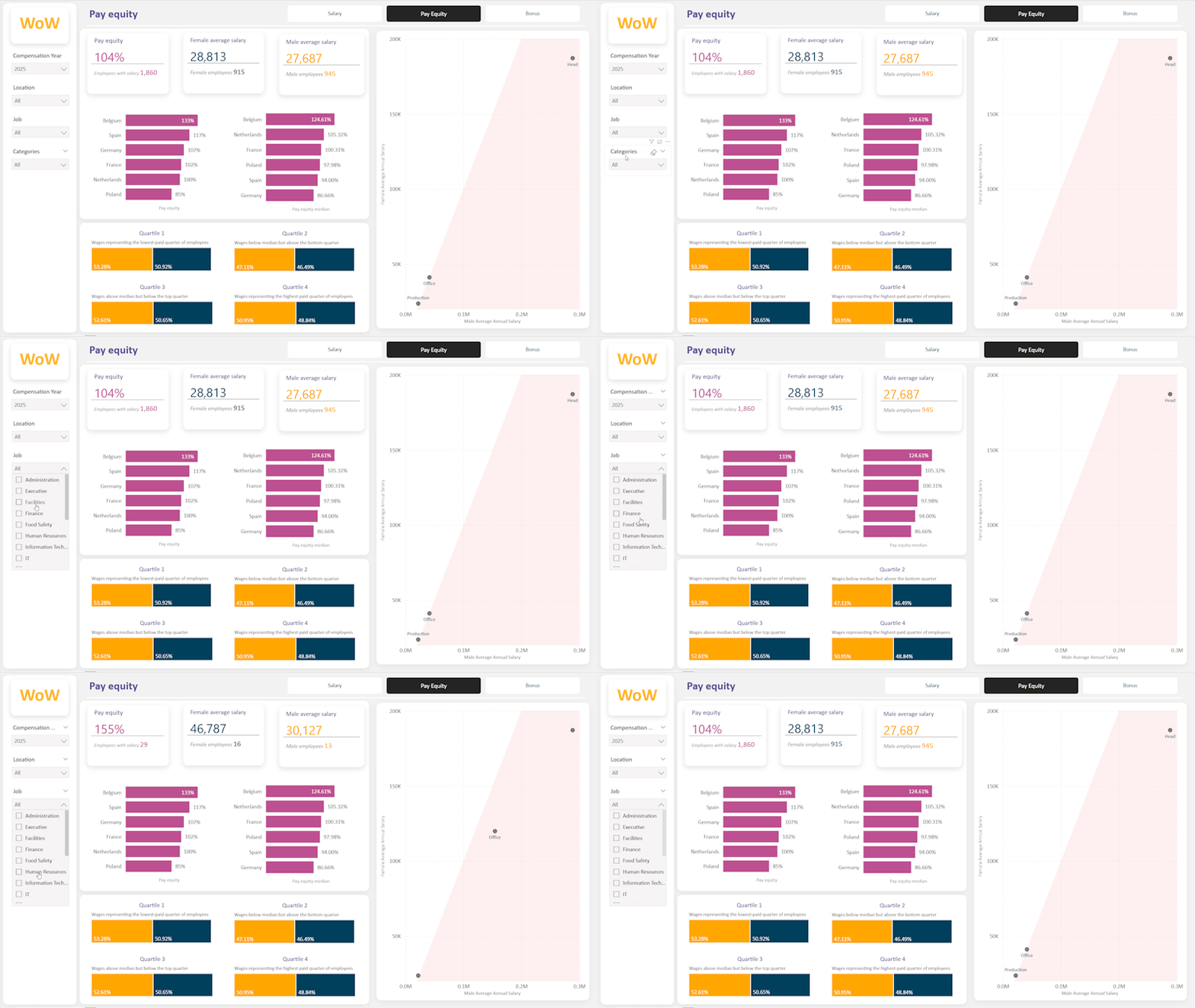
We at worldofwork™ read through the all the details of the directive and synthesized the points into this easy-to-read article. On top of that, we created a Power BI dashboard solution that will make reporting, governance, and compliance a breeze. So with that out of the way, let’s take a look at everything this directive touched upon and see how your organization, and you as HR, can comply with the changes.

The most important elements of the EU Gender Pay Directive (GPD)
The EU Gender Pay Directive was passed as law back in 2023. At that time, the directive gave the countries three years to pass the law through their national assemblies and for companies to start implementing and adhering to it.
This directive will impact over 300,000 companies and over 83 million employees across the EU. It will require a big effort to ensure everyone complies with the regulation. The five main points that will be at the forefront for businesses and employees are the following:
- Pay transparency during job seeking
- The Right To Know
- Gender pay gap reporting
- Burden of proof/backpay for employees
- Career progression path


How should you prepare for the directive
Even though the directive was signed back in 2023, the deadline for implementation is July 2026. So if you didn’t make the necessary preparations, pay attention to the following:
Pay transparency during job seeking
When recruiting people for an open position in the company, you’ll have to provide either a specific salary for the open role. Or you’ll have to provide a range for the open role. Now, some companies (and countries) already have this in place, but for other EU states, it’s still taboo.
The Right To Know
Once you hire an employee, they’ll be able to ask about the salary information (the average salary) for their specific role or a role of equal value in the company, and you’ll have to provide this information. The information will have to include data segmented for at least the role and gender.
Gender pay gap reporting
The reporting is divided into three categories:
- Companies with 250 employees or more will have to provide a gender pay report once a year
- Companies with 150-229 employees will have to provide a gender report once every three years
- Companies with 100-149 employees will start providing the reports from June 2031.
This is the obligatory minimum. Countries can add additional criteria to these. For example, in Sweden, companies with 10 or more employees have to provide a gender pay gap report annually. Since the implementation deadline is July 2026, we might still see some changes (additions to the directive) from the national parliaments of EU states.
Burden of proof/backpay for employees
With the Right To Know, the employee will see what the average salary is for their position or the position of equal value in the company. If the employee’s salary is below the average salary for that position or the equal value position in the company, the employee can demand an explanation for that discrepancy from the company.
If the explanation isn’t deemed fit (not objective reasons), then the employee can sue for discrimination and receive back pay/compensation for this discrimination, including backpay for bonuses and other related payments.
Before the directive, the burden of proof was on the employee (the employee had to provide evidence that they were discriminated against). With the directive in place, the burden of proof changed and now the company has to provide evidence that they didn’t discriminate against the employee.
Career progression path
Last but not least is the career progression path. Once you hire an employee, they’ll need to know how salary increases and promotions (career progression) happen in your company. You’ll need to have objective and transparent criteria for how you’re promoting your employees. Otherwise, employees might sue for discrimination.
With the burden of proof changing sides, now the default state will be “guilty until proven innocent” for companies so you need to learn how to comply with the regulations to avoid any discrimination charges.
The big picture
It’s important to jump on the bandwagon of these changes, not because they’ll be mandatory, but because you’ll be able to address some inefficiencies your business might have. With this directive, you can:
- Provide a clear job role structure in your company. Each role in your company should have a clear salary range and you should collect (and store) that data.
- Determine criteria for promotions and salary increases. To avoid any unnecessary discrimination claims, create clear guidelines for promotions and salary increases. That way, you can point to an objective criteria if an employee raises a claim.
- Work on transparency by providing salary information during recruitment. Every open role will need to show the salary range or starting range. This can be a good way to attract specific talent without wasting any time in the recruitment process by not aligning on the compensation for the role from the get-go. Your recruiters will thank you because they’ll avoid the “competitive” salary conversations with their candidates.

Checklist
The easiest way to track all changes from the Gender Pay Directive and make sure to comply is by:
Creating a job architecture for your entire company
- Do all roles have salary levels?
- Do all roles have clear progression paths?
- Do all roles have clear promotion criteria?
Having clean compensation data
- Do all roles have gender pay segmentation?
- Can you provide the average salary information to your employees in a timely manner?
Ensure Legal, Finance, and HR work together
- Are all systems used by the departments integrated?
- Do you have any essential information that is siloed?
- Do you have duplicate/outdated information?
What's next?
All of the above implies a potentially complex piece of work around data management, mapping and interpretation. We at worldofwork™ have spent a lot of time on the interpretation of this upcoming policy to make the data work a lot easier for our customers. We have developed a pre-build data model and data visualization layer that gives compensation & benefits teams a flying start when delivering on the Equal Pay requirement. Allowing them to combine, structure and understand the data in the deepest possible way.
We will reach out as soon as possible

.jpg?ixlib=gatsbyFP&auto=format%2Ccompress&fit=max&q=100&rect=0%2C106%2C2978%2C3350&w=960&h=1080)